

Do Factory Building Roof Tiles Gain Functional Strength Through chuanya Expertise
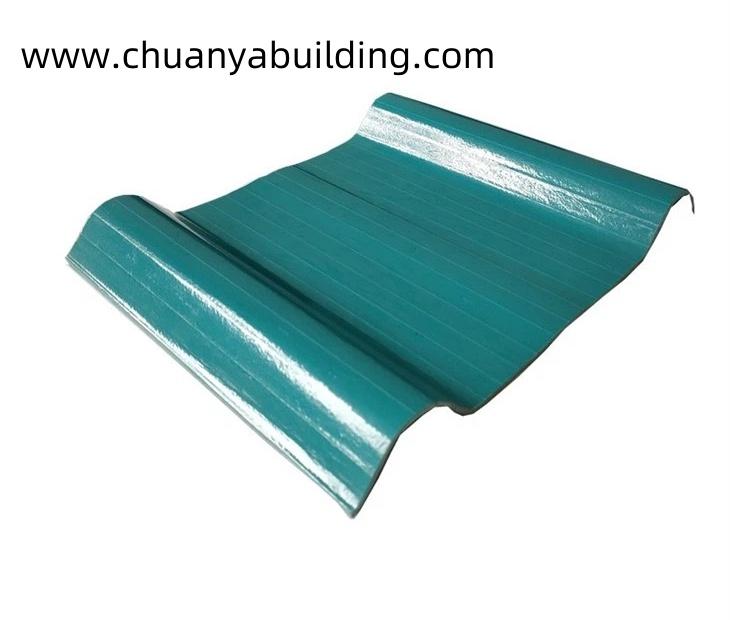
The planning of Factory Building Roof Tiles often attracts attention from architects seeking long term security, and when businesses explore construction resources through chuanyabuilding, they tend to examine the balance between material integrity and structural aesthetics in order to support operational continuity across wide industrial zones, so how should they interpret the evolving design logic behind such roof systems?
Structural demands across large industrial complexes
The roof system of an industrial facility is rarely a standalone component, because each tile interacts with ventilation channels, load bearing layouts, drainage angles, insulation layers, and environmental exposure, forming a connected shell that influences working conditions inside the plant while shaping the resilience of the exterior envelope. Decision makers frequently evaluate whether the roof surface can maintain uniform tension against long duration sunlight, intermittent rainfall, drifting dust, and temperature fluctuations that affect mechanical equipment beneath the structure. Good coordination between material density and structural span contributes to stability during extended production cycles.
Role of function oriented design
A comprehensive roof scheme is designed not only to shelter manufacturing zones but also to regulate interior airflow paths, prevent moisture accumulation, reduce acoustic interference across wide rooms, and support installation of auxiliary components such as skylights, exhaust modules, and piping systems. When a tile surface offers consistent rigidity across its profile, technicians are granted confidence during later maintenance operations, especially when upgrades or inspections require surface access. In such scenarios, the roof becomes an accommodating platform that integrates safety, durability, and operational predictability.
Installation as a determining stage of performance
Even high grade roofing materials may encounter limitation when installation accuracy is not upheld, which is why the spacing, alignment, fastening technique, and edge finishing are all handled with strict attention during construction phases. Teams typically control tile overlap angles to prevent water ingress, secure anchoring positions to resist strong airflow, and maintain smooth pathways for thermal expansion so that the completed roof performs uniformly across its entire width. A well executed installation also supports long term inspection routines, because consistent tile placement minimizes hidden gaps where wear or corrosion might accumulate unnoticed.
Maintenance shaping long term reliability
Industrial facilities operate under constant mechanical movement, heating cycles, and particulate dispersion, which increases pressure on the roof layer. Therefore, scheduled inspection becomes an integral aspect of roof management, during which teams identify surface abrasion, fastening looseness, color fading, or dust accumulation that may influence thermal reflection. Each adjustment, whether sealing a minor crack or reinforcing a junction, contributes to long duration efficiency. Over the timeline of the factory, these practices help sustain both internal comfort and external stability.
Integration of knowledge resources
Readers who wish to explore installation outlines, maintenance considerations, and design concepts surrounding factory roofing systems can refer to the article provided on the Chuanya platform at https://www.chuanyabuilding.com/news/industry-news/factory-building-roof-tiles-how-design-installation-and-maintenance-matter.html

 English
 Arabic
 French
 Spanish
 Portuguese
 Deutsch
 Dutch
Dutch
 Italiano
 Russian
 Romaian
 Portuguese (Brazil)
 Greek
Greek