

The Cloud Operators: Analyzing Cloud Managed Services Market Share
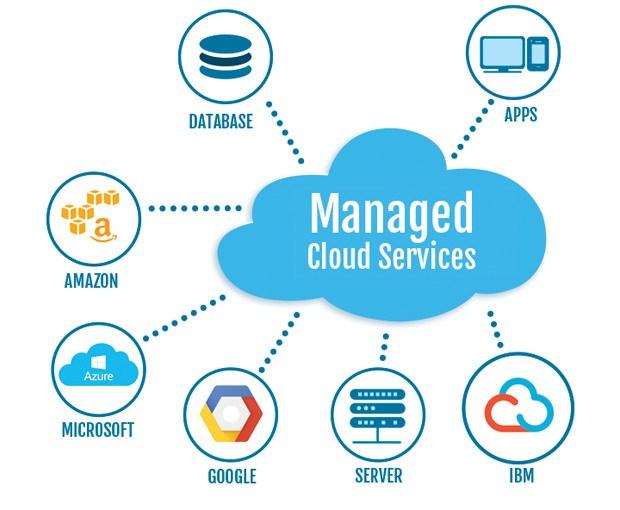
In the highly competitive and services-driven world of cloud operations, market share is a key indicator of a provider's scale, expertise, and customer trust. A detailed analysis of the Cloud Managed Services Market Share reveals a highly fragmented landscape with a long tail of competitors, but with a few global IT services giants capturing a significant portion of the large enterprise market. Market share in this industry is a direct measure of a Managed Service Provider's (MSP's) success in convincing businesses to outsource the critical responsibility of managing their cloud infrastructure. Understanding this distribution of influence is crucial for any business seeking a long-term partner, as it highlights the providers with the most experience, the most certified engineers, and the most robust global delivery capabilities to handle complex, mission-critical cloud environments.
The market share at the top end of the market, particularly for large enterprise accounts, is led by the major global system integrators (GSIs) and IT consulting firms. Companies like Accenture, IBM, Tata Consultancy Services (TCS), and Capgemini have built massive cloud managed services practices. Their market share is built on their ability to offer end-to-end services, from the initial cloud strategy and migration to the long-term, 24/7 management of the cloud environment. They have invested heavily in training and certifying tens of thousands of engineers on the major cloud platforms (AWS, Azure, GCP) and have built sophisticated global service delivery centers. Their deep, existing relationships with Fortune 500 companies make them a natural choice for these large organizations who are looking for a single, strategic partner to manage their complex, multi-cloud environments.
While the GSIs are dominant in the large enterprise space, the vast majority of the market is highly fragmented and is served by thousands of other Managed Service Providers (MSPs). This includes large, dedicated MSPs like Rackspace, which have a long history in managed hosting and have pivoted to become major players in the public cloud managed services space. It also includes a huge and growing ecosystem of smaller, regional, and "born-in-the-cloud" MSPs. These firms often differentiate themselves by having deep, specialized expertise in a particular cloud platform (e.g., being an AWS Premier Partner), a specific industry (e.g., healthcare compliance), or a particular technology (e.g., managed Kubernetes). For many small and medium-sized businesses, these more specialized and often more agile local partners are a better fit than the giant global SIs.
A crucial and unique aspect of the market share equation is the role of the major cloud providers themselves, who have a complex "co-opetition" relationship with the MSPs. The Cloud Managed Services Market Size is Growing at a CAGR of 8.16%, likely to Reach from USD 46.81 Billion to USD 110.94 Billion During 2025 - 2035. AWS, Microsoft, and Google all have their own partner programs where they certify and promote MSPs who have demonstrated a high level of expertise on their platform. The MSPs who achieve the highest partnership tiers (e.g., AWS Premier Tier Partner or Azure Expert MSP) gain a significant competitive advantage, as it serves as a powerful signal of quality and trust to potential customers. The cloud providers rely on this partner ecosystem to help drive adoption of their platforms and to provide the hands-on support that they cannot provide at scale, making the partner ecosystem a critical channel to market and a major factor in the distribution of market share.
Explore Our Latest Trending Reports:

 English
 French
 Spanish
 Portuguese
 Deutsch
 Turkish
 Dutch
Dutch
 Italiano
 Russian
 Romaian
 Portuguese (Brazil)
 Greek
Greek