

Key Equipment in Natural Gas Liquefaction Recovery
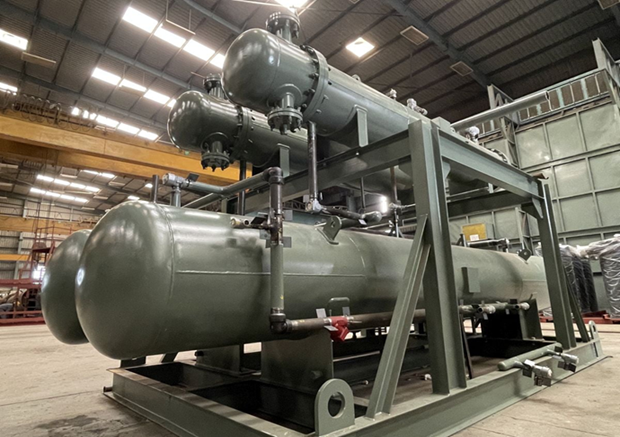
With growing energy demand and increasing environmental requirements, natural gas liquefaction recovery (LNG Recovery) technology plays an essential role in the energy industry. LNG recovery not only improves the efficiency of natural gas transport but also reduces energy waste and greenhouse gas emissions. Efficient liquefaction recovery relies on a series of core equipment working in synergy. This article introduces these key pieces of equipment and their functions.
Gas Compressor
The gas compressor is the first critical component in a liquefaction recovery system. Its primary function is to compress low-pressure natural gas to the high pressures required for liquefaction, ensuring sufficient flow and energy for the low-temperature liquefaction process.
Equipment Characteristics
Gas compressors come in several types:
-
Centrifugal Compressor: Suitable for large-scale liquefaction projects with continuous high flow. It operates quietly and efficiently, commonly used in main LNG plants.
-
Screw Compressor: Provides medium pressure and flow. Its compact design and easy maintenance make it ideal for small to medium liquefaction units.
-
Reciprocating Compressor: Handles high-pressure, low-flow applications. Offers high efficiency and can reach several hundred bar, often used in specialized high-pressure recovery applications.
The compressor is the "heart" of the liquefaction system. Its performance directly affects liquefaction efficiency and energy consumption. Choosing the right type requires consideration of gas flow, pressure, and economic factors.
Pre-cooler
The pre-cooler lowers the gas temperature before it enters the liquefaction cold box, reducing the load on downstream cryogenic equipment and improving overall system efficiency.
Equipment Characteristics
Pre-coolers can be air-cooled or water-cooled:
-
Air-cooled Heat Exchanger: Flexible installation, requires no water source, suitable for remote or small-scale liquefaction units.
-
Water-cooled Heat Exchanger: Offers high thermal efficiency, ideal for industrial-scale LNG recovery projects.
The pre-cooler acts as the "starting point" for the liquefaction process. Efficient pre-cooling significantly reduces energy consumption and enhances system performance.
Cryogenic Liquefaction Unit
The cryogenic liquefaction unit is the core of the natural gas liquefaction process. Through multi-stage refrigeration cycles, it lowers the gas temperature to around -162°C, transforming natural gas into liquid form.
Equipment Characteristics
Different refrigeration methods include:
-
Vapor Compression: Mature technology with stable operation, commonly used in small liquefaction units.
-
Cascade Refrigeration: Multi-stage refrigerants reach very low temperatures, suitable for medium to large LNG recovery projects.
-
Mixed Refrigerant: Enhances liquefaction efficiency and reduces energy consumption, ideal for large-scale LNG plants.
The design and refrigeration process of the cold box determine LNG quality and production capacity. It is the most technically demanding and capital-intensive part of the system.Expander
The expander lowers the natural gas temperature further through gas expansion while recovering some mechanical energy. This improves overall system efficiency and helps meet low-temperature liquefaction requirements.
Equipment Characteristics
-
Turbo Expander: Provides high-efficiency cooling and energy recovery, reducing liquefaction costs; commonly used in large-scale LNG plants.
-
Piston Expander: Suitable for small flows requiring low temperatures. Compact design makes it ideal for pilot or small-scale liquefaction stations.
The expander is the "energy-saving device" of the system, reducing compressor work and improving economic efficiency.
LNG Storage Tank
LNG storage tanks hold liquefied natural gas, ensuring a stable supply and minimizing boil-off losses during storage and transportation.
Equipment Characteristics
-
Double-walled Insulated Tanks: Inner layer resists low temperatures and corrosion; outer layer provides structural support; widely used in industrial LNG storage.
-
Spherical Tanks: High-pressure storage in a compact volume, suitable for specialized transport and storage.
-
Portable Tanks: Designed for small-scale or mobile LNG supply in remote locations.
LNG storage tanks are the "end point" of the liquefaction recovery process. Safety, insulation, and low-temperature resistance determine the reliability of transport and supply.
Conclusion
Natural gas liquefaction recovery is a highly integrated system. Compressors, pre-coolers, cryogenic units, expanders, and storage tanks are the core equipment. Each plays a unique role, and only through proper integration and optimization can high efficiency, safety, and cost-effectiveness be achieved. In the future, intelligent, energy-efficient, and modular equipment will become the main trend in LNG recovery.

 English
 Arabic
 French
 Spanish
 Portuguese
 Deutsch
 Turkish
 Dutch
Dutch
 Italiano
 Russian
 Romaian
 Greek
Greek